We've moved!
Check out News from Google
for all the latest updates.
Official Blog
Insights from Googlers into our products, technology, and the Google culture
Under the hood of Google Maps 5.0 for Android
December 17, 2010
Yesterday we
introduced Google Maps 5.0 for Android
with two significant new features: 3D interaction and offline reliability. In order to create these features, we rebuilt Maps using
vector graphics
to dynamically draw the map as you use it. Building a vector graphics engine capable of achieving the visual quality and performance level you expect from Google Maps was a major technical challenge and enables all sorts of future possibilities. So we wanted to give you a closer look under the hood at the technology driving the next generation of mobile maps.
Vector graphics
Before diving into how Maps uses vector graphics, it may be helpful to understand how maps were created before. Previously, Google Maps downloaded the map as sets of individual 256x256 pixel “image tiles.” Each pre-rendered image tile was downloaded with its own section of map imagery, roads, labels and other features baked right in. Google Maps would download each tile as you needed it and then stitch sets together to form the map you see. It takes more than 360 billion tiles to cover the whole world at 20 zoom levels!
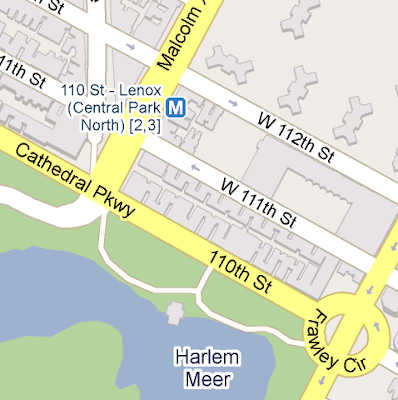
Now, we use vector graphics to dynamically draw the map. Maps will download “vector tiles” that describe the underlying geometry of the map. You can think of them as the blueprints needed to draw a map, instead of static map images. Because you only need to download the blueprints, the amount of data needed to draw maps from vector tiles is drastically less than when downloading pre-rendered image tiles. Google Maps isn’t the first mobile app to use vector graphics—in fact, Google Earth and our Navigation (Beta) feature do already. But a combination of modern device hardware and innovative engineering allow us to stream vector tiles efficiently and render them smoothly, while maintaining the speed and readability we require in Google Maps. Just try it out and see for yourself!
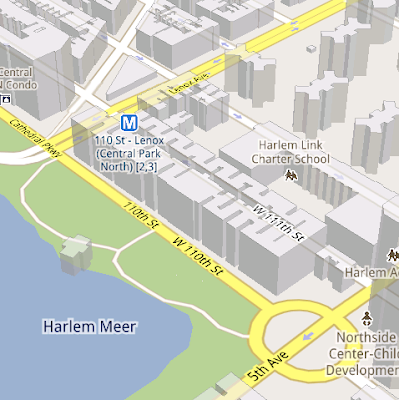
See the difference between image tiles (left) and vector tiles (right) tilted to show 3D buildings.
One map, many perspectives
Using vector tiles instead of image tiles gives Maps the flexibility to re-draw the same map from different perspectives using the same set of data. Zooming is one example of this at work. If you magnify an map image tile by 2x, lines such as roads and text would get twice as wide and appear blurry. As a result, we had to constrain Maps to 20 fixed “zoom levels,” each one twice as close as the last. Every time you zoomed in further, you’d need to download a completely new set of image tiles. It took time to load new data over a mobile data connection, and would fail when you lost your connection in a subway or large building.
Compared to image tiles (left), vector tiles (right) keep lines and labels crisp as you zoom.
With vector graphics, you no longer need to “round” to the nearest zoom level and then download all the tiles for that level. One vector tile has the underlying vector data (or blueprints) to draw the map at many different levels of scale. So when you zoom, the map stops when your fingers stop, and roads and labels always stay crisp. This same technique powers the new 3D map interactions: tilt, rotate and compass mode. Just like with zooming, Maps uses the same vector data to draw the map from any angle or direction as you tilt or rotate.
We can also display entirely new levels of detail that weren’t possible with flat image tiles. For example, in the
100+ cities
where we have 3D building data, each building is drawn in 3D using a polygonal building footprint and heights for different parts of the building. And with tilt and rotate, you can see them from a variety of different angles.
Reading the map
Just like other map features, labels are dynamically drawn so they continue to face you and stay legible if you rotate the rest of the map or use compass mode. Maps also “chooses” the best labels to show you based on several factors. You’ll notice labels fade in and out as you interact with the map so that the most useful ones appear and the map never gets too cluttered.
See the difference between rotating maps with static labels (left) and dynamic labels (right).
Vector graphics also allow us to draw additional data on the map more clearly. For example, traffic or transit lines no longer block the labels beneath them. We can also draw the same map in different styles—like “satellite view” where the roads are translucent over aerial imagery, or Navigation’s “night mode” where a darker palette helps your eyes adjust quickly in the lower light.
Previously, map features like labels and traffic could conflict (left) instead of blend seamlessly (right).
Offline reliability
Vector graphics also enable another significant new feature: the ability to continue viewing maps even when you have poor—or no—network connections. Because each vector tile works across multiple zoom levels, it requires more than 100 times less data to view maps across all zoom levels than before, allowing Maps to cache much larger areas of the map on your device.
With this first version, Maps proactively caches map data for the places you use Maps the most—where you’re actively using it as well as places for which you search or get directions. Then when you’re plugged in and connected over WiFi, caching happens automatically. Near your frequent places, you’ll get detailed vector tiles for city-sized regions so you can see every road labeled. Further away, you’ll have less detail but will typically have towns and highways labeled for miles. We’re continuing to work on these algorithms, so you’ll see improvements over time.
Offline rerouting
With Google Maps Navigation (Beta), you’ll also see the benefits of additional caching with offline rerouting. This feature is only possible because Navigation caches not only map data but also data like turn restrictions for the areas surrounding your route. You’ll still need to be connected when you first start a trip to download and cache your route. But this way, even if you take a wrong turn after losing your connection, Navigation can use the cached data to get you back on your way. We will be rolling this feature out gradually over the next few weeks.
This is just the start, and we’re really excited about all the possible ways to use vector graphics technology for the next generation of Google Maps. So please stay tuned!
Update
12:43 PM
: Tweaked the description of the difference between image maps zoom levels.
Posted by Andrew Miller, Software Engineer, Google Maps for mobile
Spreading holiday cheer with charitable donations
December 17, 2010
The past couple of years have been a challenging stretch for charitable organizations as giving tends to decline during economic downturns when the need is highest. Charitable giving was
down 3.6% in 2009
, only the second year there’s been a drop since
Giving USA
began their reports in 1956. We continue to be inspired, however, by organizations that have stepped up with creative and effective programs to address today’s challenges. We’re grateful for the millions of Google users who helped continue our success in 2010, and we want to do our part to help charitable organizations that are working tirelessly to meet increased need with decreased funding.
In this spirit, our global sales team led by Nikesh Arora is giving a $20 million
holiday gift
that will provide:
Schooling for 15,000 kids in poor communities in India through
Bharti Foundation
.
Access to vital medication and health services, especially for women and girls, in post-conflict areas in Africa through
Global Strategies for HIV Prevention
.
Vaccines to protect 50 million children from polio through
UNICEF
.
Strategic support and online tools for 1.5 million social entrepreneurs through partners including
Ashoka
,
NTEN
,
APC
and
LASA
.
Environmental education in the National Parks for 40,000 students through
NatureBridge
.
We will exceed our 2010 target this year with charitable giving, with more than $145 million going to non-profits and academic institutions, and more than $184 million in total giving when including
Google Grants
,
Google.org
technology projects and product
support for non-profits
. Some of our major initiatives include:
Supporting
science and math education
and education reform through partners including
New Schools Venture
,
Teach for All
,
Citizens Schools
and
Posse Foundation
. We provide
scholarships
to help dismantle barriers that keep women and minorities from entering computing and technology fields. We also
support
the next generation of engineers and maintain strong ties with academic institutions worldwide that are pursuing research in areas relevant to our mission.
Responding to
natural disasters
in
Pakistan
,
Haiti
,
China
and
Chile
and
humanitarian crises
through partners such as
Rural Development Institute
,
Eastern Congo Initiative
,
Engineers without Borders
and
Nahdet El Mahrousa
.
Promoting
technology solutions
that empower underserved groups and emerging economies such as
Camfed
,
Digital Divide Data
,
igotITtoo
and
Samasource
.
Strengthening
communities where we live and work
, such as
Friends of the High Line
in New York and
Age Action
in Dublin.
To keep up with Googlers’ generosity in their personal giving, we also increased our charitable matching to $12,000 per employee. We thank our partners and all those who use Google for their continued business and wish everyone a happy, healthy holiday season.
Posted by Jacquelline Fuller, Director, Charitable Giving
Governments shouldn’t have a monopoly on Internet governance
December 17, 2010
The beauty of the Internet is that it’s not controlled by any one group. Its governance is bottoms-up—with academics, non-profits, companies and governments all working to improve this technological wonder of the modern world. This model has not only made the Internet very open—a testbed for innovation by anyone, anywhere—it's also prevented vested interests from taking control.
But last week the UN Committee on Science and Technology
announced
that only governments would be able to sit on a working group set up to examine improvements to the
IGF
—one of the Internet’s most important discussion forums. This move has been condemned by the Internet Governance Caucus, the Internet Society (ISOC), the International Chamber of Commerce and numerous other organizations—who have published a
joint letter
(PDF) and launched an
online petition
to mobilize opposition. Today, I have signed that petition on Google’s behalf because we don’t believe governments should be allowed to grant themselves a monopoly on Internet governance. The current bottoms-up, open approach works—protecting users from vested interests and enabling rapid innovation. Let’s fight to keep it that way.
Posted by Vint Cerf, Chief Internet Evangelist
YouTube Highlights 12/16/2010
December 16, 2010
This is the latest in our series of YouTube highlights. Every couple of weeks, we bring you an update on new product features, interesting programs to watch, and tips you can use to grow your audience on YouTube. Just look for the label “
YouTube Highlights
” and subscribe to the series. – Ed.
Since our last update, we’ve taken a look at the year on YouTube, asked for your ideas on how to make the world a better place, launched a series of contests and announced a wave of new features. We have a lot to cover!
The year on YouTube
From videos that blew our minds to ones that made dreams come true, the
Top 10 YouTube videos
show what video stars captured the world’s attention this year. In the past year, viewers watched more than 700 billion YouTube videos, and uploaded more than 13 million hours of video. See what people
watched in 2010
:
We are also
counting down YouTube highlights
for the year with the
New Year’s Countdown
.
Your ticket to Davos, Switzerland
Do you have an idea about how to close the poverty gap? If so, submit it to the
Davos Debates program
for a chance to win an all-access pass to the World Economic Forum in Davos. To enter, submit a one-minute video sharing your ideas about the importance of inclusive growth—economic growth that benefits everyone—a key theme of this year’s event. The deadline to submit your ideas is January 14, so visit the
Davos channel
today.
Your vote counts on YouTube
Your opinion can help determine bragging rights for artists of all stripes. Get the chance to weigh in on your favorite music star, auditions for the YouTube Symphony Orchestra—and find out who won another recent competition.
Rihanna or Justin Bieber? Show these artists how devoted you are with the
MyYouTube contest
. Artists score points if you subscribe to their channels and share with your friends. You, in turn, get their latest videos delivered to your YouTube homepage and get to win some great prizes.
We’re down to
336 finalists from 46 countries
for the
YouTube Symphony Orchestra
, and voting ends on December 17. The winners will perform for a global audience at the Sydney Opera House in March 2011.
The winner of this month’s “
On the Rise
” competition is the irresistible Jack Russell terrier,
Jesse
.
Check out
some of his fun antics.
Creating an efficient, healthy home
Ask any working parent and they’ll tell you they have two jobs: the day job, and the one that takes up all the other hours of the day—that of “
Chief Household Officer
” (CHO). A
new YouTube series
from
HP
takes you inside the lives of women who meet the demands of work and family using new media know-how.
Eating right can also be a challenge for busy families.
Sesame Street
and
Chef Art Smith
have teamed up to raise awareness about how families can eat healthy food on a budget.
See what Elmo and Chef Art have to say
.
New features for YouTube
We’ve made a handful of updates over the last two weeks to make your viewing experience and more robust:
Enhanced the video discovery experience in
Leanback
with
Personalized Channels
.
Allowing selected users to
upload videos that are longer than 15 minutes
.
Improvements to annotations
including a new annotation editor and a new title annotation type.
And we announced the
three-year anniversary
of
Content ID
, a technology that lets rights holders control their content online.
Google Apps for YouTube
Businesses and organizations using Google Apps
can now use YouTube
. YouTube can help Google Apps customers in lots of ways—whether archiving company videos, marketing their company through branded video channels, or assisting with private, internal communications.
We’ll update you again in a few weeks. Till then, for more information on what we’re up to, head on over to our
YouTube Blog
. Happy holidays and see you in 2011!
Posted by Serena Satyasai, Marketing Manager, The YouTube Team
Celebrating 10 years in Chicago
December 16, 2010
These days, you probably know the city of Chicago as the home of
great comedy
,
amazing parks
,
soaring skyscrapers
,
championship hockey
and—no matter what our colleagues at Google NYC say—the
greatest pizza in the world
. But you might not know that Chicago is also home to one of Google’s oldest U.S. offices: this week
Google Chicago
celebrated its 10th anniversary. To mark the event, we celebrated with a party, a giant anniversary cake (18 lbs of butter, 100+ eggs and 60 lbs fondant) and most importantly, 10 community grants to 10 organizations in Chicago.
Over the past 10 years, Google Chicago has grown in terms of both size and responsibilities—we started with just two members of our nascent sales team, but today we have more than 400 employees in our office across engineering, sales and operations. Chicago too has certainly come a long way from
Carl Sandburg’s days
and we’re proud to be playing a small part in making the city a center for technological innovation.
Along the way, we’ve been fortunate to work with folks from around the region to make things better for users. Our Apps team has helped bring our email and app solutions to students at both Notre Dame University and Northwestern University, we’ve built a project
with the Chicago Transit Authority
and last year, we announced, alongside Mayor Daley, Google’s
$3.2 billion economic impact
on Illinois.
We’re also particularly proud of our contributions to Google. Our Chicago-based engineering team launched the
Data Liberation Front
, which allows users to export their data from our products, from the ground up. With those efforts, the team has begun to change the way consumers think about web services and data portability. In 2007, we
acquired Chicago-based FeedBurner
, and today the product has been fully integrated into Google’s ad platform. And Google’s acquisition of DoubleClick included what is now the Chicago-based
Google Affiliate Network
, whose deals have helped consumers across the globe.
Google Chicago couldn’t have come this far without a talented group of employees. We’ve been very fortunate to find top-notch talent in the Midwest to build out our sales and engineering teams, and we don’t expect that to stop anytime soon. Come
join and help us
build the next 10 years in Chicago!
Oh, and one last thought: please ... when you visit us in Chicago, NEVER put ketchup on your hot dog. (In Chicago,
we know a thing or two about our hot dogs
!)
Posted by Jim Lecinski - Managing Director U.S. Sales (and Chicago Native)
Find out what’s in a word, or five, with the Google Books Ngram Viewer
December 16, 2010
Scholars interested in topics such as philosophy, religion, politics, art and language have employed qualitative approaches such as literary and critical analysis with great success. As more of the world’s literature becomes available online, it’s increasingly possible to apply quantitative methods to complement that research. So today Will Brockman and I are happy to announce a new visualization tool called the
Google Books Ngram Viewer
, available on Google Labs. We’re also making the datasets backing the Ngram Viewer, produced by Matthew Gray and intern Yuan K. Shen, freely downloadable so that scholars will be able to create replicable experiments in the style of traditional scientific discovery.
Comparing instances of [flute], [guitar], [drum] and [trumpet] (
blue, red, yellow and green respectively)
in English literature from 1750 to 2008
Since 2004, Google has digitized more than 15 million books worldwide. The datasets we’re making available today to further humanities research are based on a subset of that corpus, weighing in at 500 billion words from 5.2 million books in Chinese, English, French, German, Russian, and Spanish. The datasets contain phrases of up to five words with counts of how often they occurred in each year.
These datasets were the basis of a research project led by
Harvard University's
Jean-Baptiste Michel and Erez Lieberman Aiden published today in
Science
and coauthored by several Googlers. Their work provides several examples of how quantitative methods can provide insights into topics as diverse as the spread of innovations, the effects of youth and profession on fame, and trends in censorship.
The Ngram Viewer lets you graph and compare phrases from these datasets over time, showing how their usage has waxed and waned over the years. One of the advantages of having data online is that it lowers the barrier to serendipity: you can stumble across something in these 500 billion words and be the first person ever to make that discovery. Below I’ve listed a few interesting queries to pique your interest:
World War I, Great War
child care, nursery school, kindergarten
fax, phone, email
look before you leap, he who hesitates is lost
virus, bacteria
tofu, hot dog
burnt, burned
flute, guitar, trumpet, drum
Paris, London, New York, Boston, Rome
laptop, mainframe, microcomputer, minicomputer
fry, bake, grill, roast
George Washington, Thomas Jefferson, Abraham Lincoln
supercalifragilisticexpialidocious
We know nothing can replace the balance of art and science that is the qualitative cornerstone of research in the humanities. But we hope the Google Books Ngram Viewer will spark some new hypotheses ripe for in-depth investigation, and invite casual exploration at the same time. We’ve started working with some researchers already via our
Digital Humanities Research Awards
, and look forward to additional collaboration with like-minded researchers in the future.
Posted by Jon Orwant, Engineering Manager, Google Books
Send a message of holiday cheer with Google Maps
December 16, 2010
(Cross-posted on the
Lat Long Blog
)
For me, celebrating the holidays is about spending time with family and friends. Along with sharing delicious meals and building snowmen in the backyard, getting into the season often means traveling to places both familiar and new, whether
going to visit family
or walking down the
Champs-Élysées
to see the holiday lights.
We’re sure many of you have holiday plans in the works, so we’ve designed greeting cards you can email to friends and family—to share those fun adventures or just to say hello from wherever you are around the world. In addition to choosing from
10 holiday covers
and adding a personal message, you can include specific directions, a Street View image or a favorite place on the inside of the card.
Since I grew up in New England, the holidays always make me think of skiing. So I’ll send some of my friends cards with
inspiring ski scenes
in Street View, or
directions to Squaw Valley
for an upcoming ski trip.
Around this time of year, I also get nostalgic about specific places where great holiday memories were made, so the card I’ll send to my family will remind them of the amazing breakfasts we had at
Lou’s
during past holiday seasons. And the card to my friends in New York will suggest
a restaurant
we should try when I visit them in a couple of weeks.
Thanks to
Christoph Niemann
for inspiration
And of course, to share some winter weather with my friends in California, I’ll send a card with some wintry scenes of
Antarctica
and
Whistler
, and snowy greetings on the cover.
We hope these online cards help you stay connected and share holiday cheer with your loved ones, whether you send directions to a holiday party, winter imagery from Street View or the various places that signify the spirit of the season to you. Start sending at
googlemapsholidays.appspot.com
. Happy holidays!
Posted by Katie Mandel, Product Marketing Manager, Google Maps
Labels
Africa
19
Android
58
April 1
4
Asia
39
Europe
46
Latin America
18
accessibility
41
acquisition
26
ads
131
apps
418
books + book search
48
commerce
12
computing history
7
crisis response
33
culture
12
developers
120
diversity
35
doodles
68
education and research
144
entrepreneurs at Google
14
faster web
16
free expression
61
google.org
73
googleplus
50
googlers and culture
202
green
102
maps and earth
194
mobile
124
online safety
19
open source
19
photos
39
policy and issues
139
politics
71
privacy
66
recruiting and hiring
32
scholarships
31
search
505
search quality
24
search trends
118
security
36
small business
31
user experience and usability
41
youtube and video
140
Archive
2016
Nov
Oct
Sep
Aug
Jul
Jun
May
Apr
Mar
Feb
Jan
2015
Dec
Nov
Oct
Sep
Aug
Jul
Jun
May
Apr
Mar
Feb
Jan
2014
Dec
Nov
Oct
Sep
Aug
Jul
Jun
May
Apr
Mar
Feb
Jan
2013
Dec
Nov
Oct
Sep
Aug
Jul
Jun
May
Apr
Mar
Feb
Jan
2012
Dec
Nov
Oct
Sep
Aug
Jul
Jun
May
Apr
Mar
Feb
Jan
2011
Dec
Nov
Oct
Sep
Aug
Jul
Jun
May
Apr
Mar
Feb
Jan
2010
Dec
Nov
Oct
Sep
Aug
Jul
Jun
May
Apr
Mar
Feb
Jan
2009
Dec
Nov
Oct
Sep
Aug
Jul
Jun
May
Apr
Mar
Feb
Jan
2008
Dec
Nov
Oct
Sep
Aug
Jul
Jun
May
Apr
Mar
Feb
Jan
2007
Dec
Nov
Oct
Sep
Aug
Jul
Jun
May
Apr
Mar
Feb
Jan
2006
Dec
Nov
Oct
Sep
Aug
Jul
Jun
May
Apr
Mar
Feb
Jan
2005
Dec
Nov
Oct
Sep
Aug
Jul
Jun
May
Apr
Mar
Feb
Jan
2004
Dec
Nov
Oct
Sep
Aug
Jul
Jun
May
Apr
Feed
Google
on
Follow @google
Follow
Give us feedback in our
Product Forums
.




 Follow

